By Jacques Fouché — Founder & Expert Guide
Honours degree in Physical Education and Sport Psychology. 20+ years of safari expertise exploring Southern Africa's most remote landscapes.
What Is a Guided Self-Drive Safari? Definition & How It Works
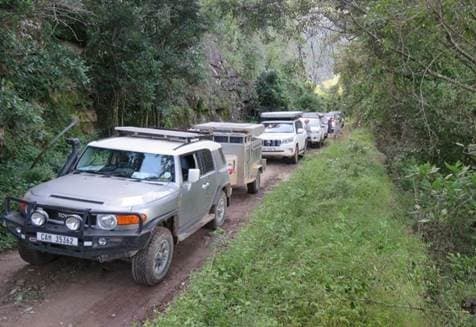
"Guided self-drive safari" is a term travellers hear a lot but rarely see clearly defined. In short: you drive your own 4x4, but an expert guide leads the way in a convoy. This short explainer defines exactly what that means, how it differs from a lodge safari and a solo overland trip, and the kind of traveller it suits best.
A Simple Definition
A guided self-drive safari is a trip where you drive your own fully-equipped 4x4 while following a professional guide who leads the group as a convoy. You are the one behind the wheel — choosing your line through the sand, spotting your own wildlife, setting your own pace at camp — but a qualified guide is always just ahead of you on the radio, handling navigation, route decisions, and anything that goes wrong.
Put another way: it keeps the independence of an overland road trip while removing the isolation and risk of doing it entirely alone. You are self-driving, but never on your own.
How It Differs From Other Safari Styles
The easiest way to understand the format is to compare it with the two traditional alternatives.
Lodge / fully-guided safari
A professional driver-guide does everything; you are a passenger in the back of the vehicle. It is comfortable and effortless, but you have little control over pace, route, or how long you linger at a sighting — and the sense of adventure is limited.
Independent self-drive
You rent a 4x4 and go it completely alone. Total freedom — but you personally carry every risk: mechanical breakdowns in remote areas, navigation errors, recovery when you get stuck, and all the cross-border paperwork.
Guided self-drive (the middle ground)
You drive and make the day feel like your own adventure, while a lead guide absorbs the risk and logistics. It sits deliberately between the two extremes: more hands-on than a lodge safari, far more supported than going solo.
What a Typical Day Looks Like
To make the concept concrete, here is how a day on a guided self-drive convoy usually unfolds:
- Morning briefing: The guide outlines the route, terrain, distances, and what to expect before you set off.
- You drive, they lead: You follow the lead vehicle in convoy, staying in touch by two-way radio the whole way.
- Stops on your terms: The group pauses for wildlife, photos, and lunch — with plenty of time to simply take it in.
- Camp set-up: You arrive at a pre-arranged campsite; the guide has already handled the booking and the logistics.
- Evening debrief: Stories around the fire and a preview of tomorrow's leg.
Who Handles What
A quick way to picture the split of responsibilities on a guided self-drive safari:
- You do: the driving, the wildlife spotting, and setting your own daily rhythm.
- Your guide does: route planning, radio navigation, campsite and permit bookings, border formalities, and vehicle recovery if needed.
Who Is It For?
A guided self-drive safari tends to suit travellers who want to be actively involved rather than chauffeured around:
- Adventure seekers who want the thrill of driving but value a safety net.
- Couples and families looking for a shared, hands-on experience without the risk of going alone.
- Experienced overlanders who want local expertise to unlock routes they couldn't reach solo.
- First-timers who are curious about self-driving but not yet confident tackling Africa unassisted.
Want to Go Deeper?
This article covers the "what" and the "who." If you're ready to plan a trip — including safety in remote regions, beginner driver training, the best time of year to travel, and the most iconic destinations — read our Complete Guide to Guided Self-Drive 4x4 Safaris in Africa.